The most widespread myths and beliefs in the Congo
Africa is a continent known as a land of spirits, a continent of shamans and a place of natural remedies. The Congo is no exception to this tradition; although more than half the population adheres to a formal religion, mystical beliefs remain widespread amongst the people and play a significant role in daily life. They underpin community life and sometimes even intrude into the everyday reality of Congolese people.
Fantasy, beliefs, myths, or even imaginary tales – in this article, we reveal a glimpse of Congolese mysticism and its mysteries. Right then, let’s get started – we’ll tell you everything.
The Congo River and its secret island:
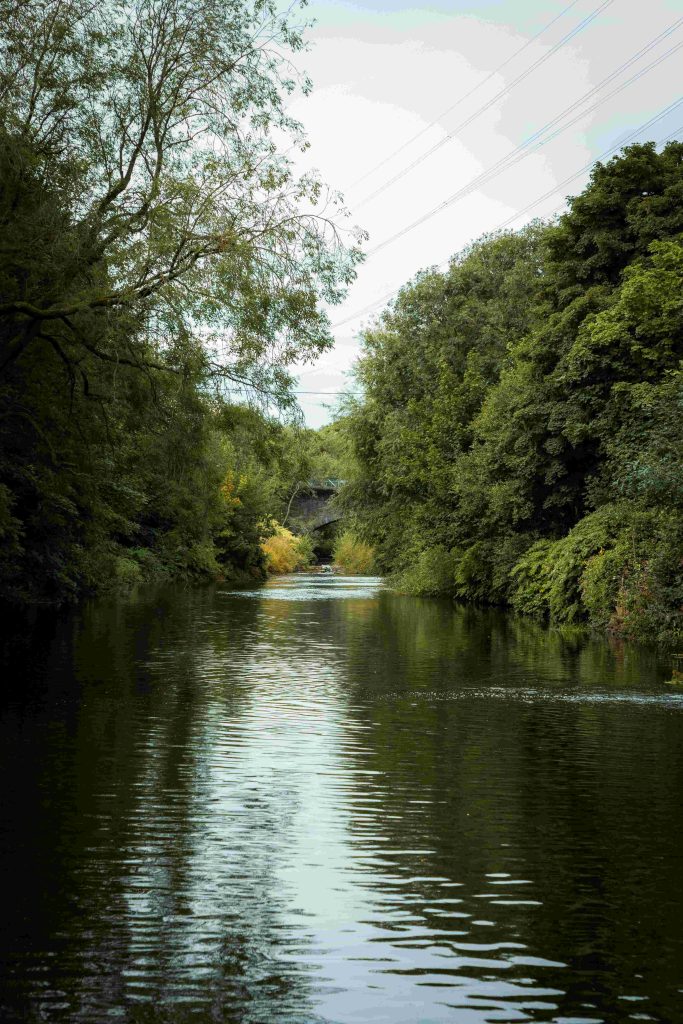 The Congo River is one of the continent’s most important rivers. In everyday life, it is sometimes overlooked by its inhabitants, yet anyone with an interest in it has no doubt heard of the river’s secret island. It is said to be an island situated in a wide stretch of the river’s centre, covered in untouched vegetation: it is known as Devil’s Island.
According to legend, it is an island of one-way travel. No one has ever returned from attempts to explore the island, as it is said to be protected by evil spirits and spells of all kinds.
The reality: the island does indeed exist and is actually called Devil’s Island. However, the beliefs surrounding it are nothing more than rumours; to date, no one has been reported missing on or around the island. These rumours are nonetheless significant, as they have deterred locals from venturing onto the island during oil exploration work. The island remains uninhabited and is sometimes subject to strong currents along its shores, which may fuel the fears surrounding it.
The Remnants of the Kingdom of Kongo:
 Before Belgian colonisation in Central Africa, what is now known as Congo-Brazzaville was united under a single empire: the Kingdom of Kongo. This kingdom included Angola, the Republic of the Congo, Congo-Brazzaville and Gabon amongst the territories it occupied.
The first two monarchs of the kingdom were Ntotila and Alphonse I, both of whom were converted to Christianity by the Portuguese. Alphonse I was the first King of Kongo to be entirely devoted to Christianity.
It is worth noting that the Kingdom of Kongo lasted from 1390 to 1914. The Kingdom of Kongo was one of the most active in the region, expanding and trading its territory with other kingdoms through campaigns of conquest and battles.
It was a kingdom that had very close ties with Portugal. Yet it was the same country that abolished the title of King of Kongo in 1915. The majority of the Kingdom of Kongo is located within the territory of modern-day Angola, whilst significant parts of the kingdom were situated in the DRC and Congo-Brazzaville.
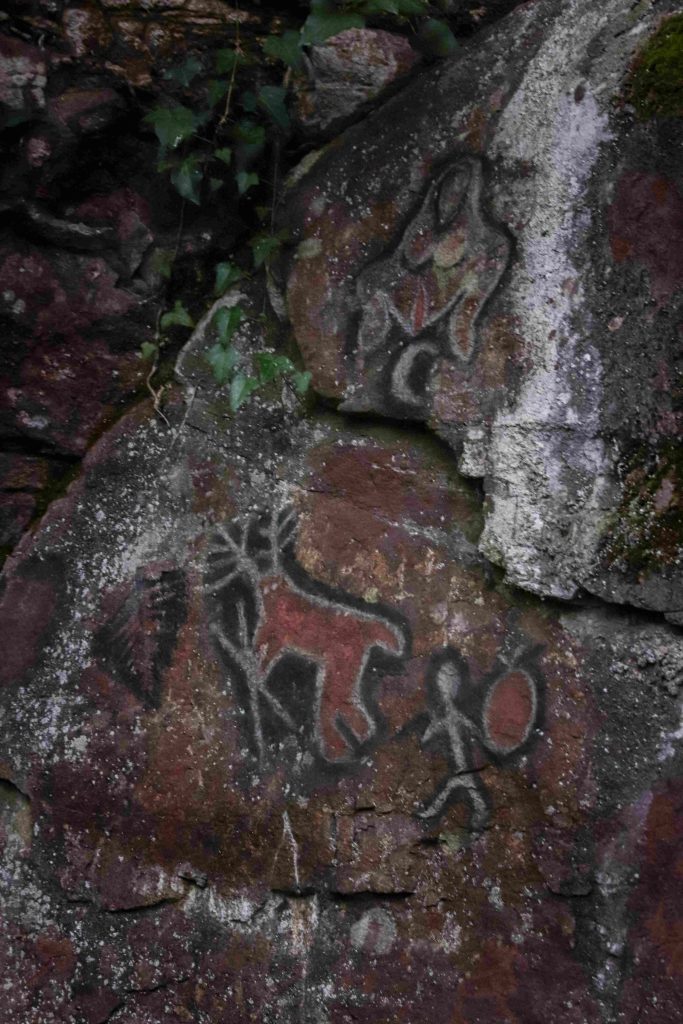
It is in Niari, where rock paintings have been found, that stories tell of how the famous Kingdom of Kongo is said to have left traces of its civilisation in caves. In reality, the rock paintings are prehistoric remains left by the nomads who roamed Africa during the Stone Age: there are nearly seven sites of rock paintings in the region. Painted in ochre and extremely fragile, they are not open to visitors. They depict hunting scenes and consist of ornamental and decorative designs.
The Mokélé-mbembé:
 This is a myth which tells of a long-necked sea monster said to live at the bottom of the Congo River. The monster is said to be enormous in size and to hide in the river’s waters, feeding on fish. Whilst the exact depth of the Congo River has not yet been determined—currently estimated at around 220 metres—it is equally certain that no giant monster inhabits the area. In the vicinity of the river live Pygmy communities who rely on the waterway for their livelihood. The river is rich in fish stocks, and in addition to the Pygmy population, a significant proportion of the country’s population heads there to fish for subsistence. Boats of all kinds ply the Congo River, transforming it into a veritable economic and social artery of Central Africa. For tourists, several options are available to explore the Congo River in complete tranquillity: canoe trips, river cruises, immersive journeys, … Please note that whilst there are many options for exploring the waters of the Congo River, it is important to check the navigation permits and certifications held by the crew and the guide before boarding. An expedition on the Congo River offers the chance to observe hippos, crocodiles and the river’s marshy vegetation. Furthermore, cruises on the Congo River allow you to get a closer look at the way of life of the local river communities and the famous river Pygmies.
Finally, among the natural sites located on or along the Congo River that are well worth a visit are: the Oufoulakari or Sossi Falls, the Manguenguengue cliffs, and the Lésio-Louna Reserve.
Birds of ill omen, birds of good omen:
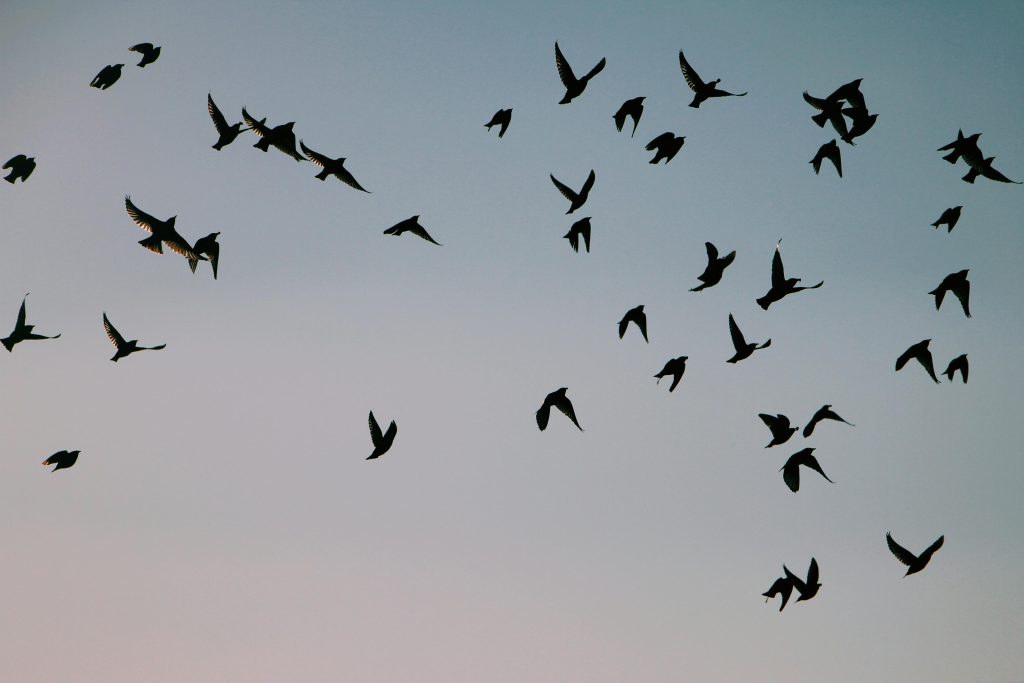 In the Congo, birds hold a special significance; they are generally believed to possess the power to bridge the gap between the real world and the spirit world. Indeed, according to local beliefs, birds can act as a link between the living and the spirit world; they are seen as a kind of messenger capable of conveying the spirits’ various wishes and incantations to the living.
For example, in the Congo, the hooting of owls is associated with an evil spirit seeking to take a life within the household where you live. Similarly, hearing a crow caw is said to be a harbinger of misfortune.
It is worth noting that the Congo is rich in observable bird species; its avifauna is particularly diverse, with nearly 800 species of birds. These include waterbirds such as waders, forest and savannah birds, and other species. Good spots for birdwatching in Congo include: Mbamou Island, the Lesio-Louna Nature Reserve, and Odzala-Kokoua National Park.